

Top Athletic GPS Smartwatch for Marathon and Cycling
B2B buyers are under more and more pressure to find multi-GNSS location smartwatches that are especially made for endurance sports, while also being able to make a profit. An Athletic GPS Smartwatch designed for marathons and riding must provide sub-meter location accuracy, be built to withstand different weather conditions, and have a battery life that lasts for long training sessions. To get a bigger share of the competitive U.S. wearables market and keep customers happy, you need to know about the technical standards and supplier capabilities behind these devices. This is true whether you're an Amazon FBA seller trying out a new niche, a regional distributor adding to your electronics catalog, or a private label brand looking for OEM customization.
Understanding Athletic GPS Smartwatches: Features & Benefits
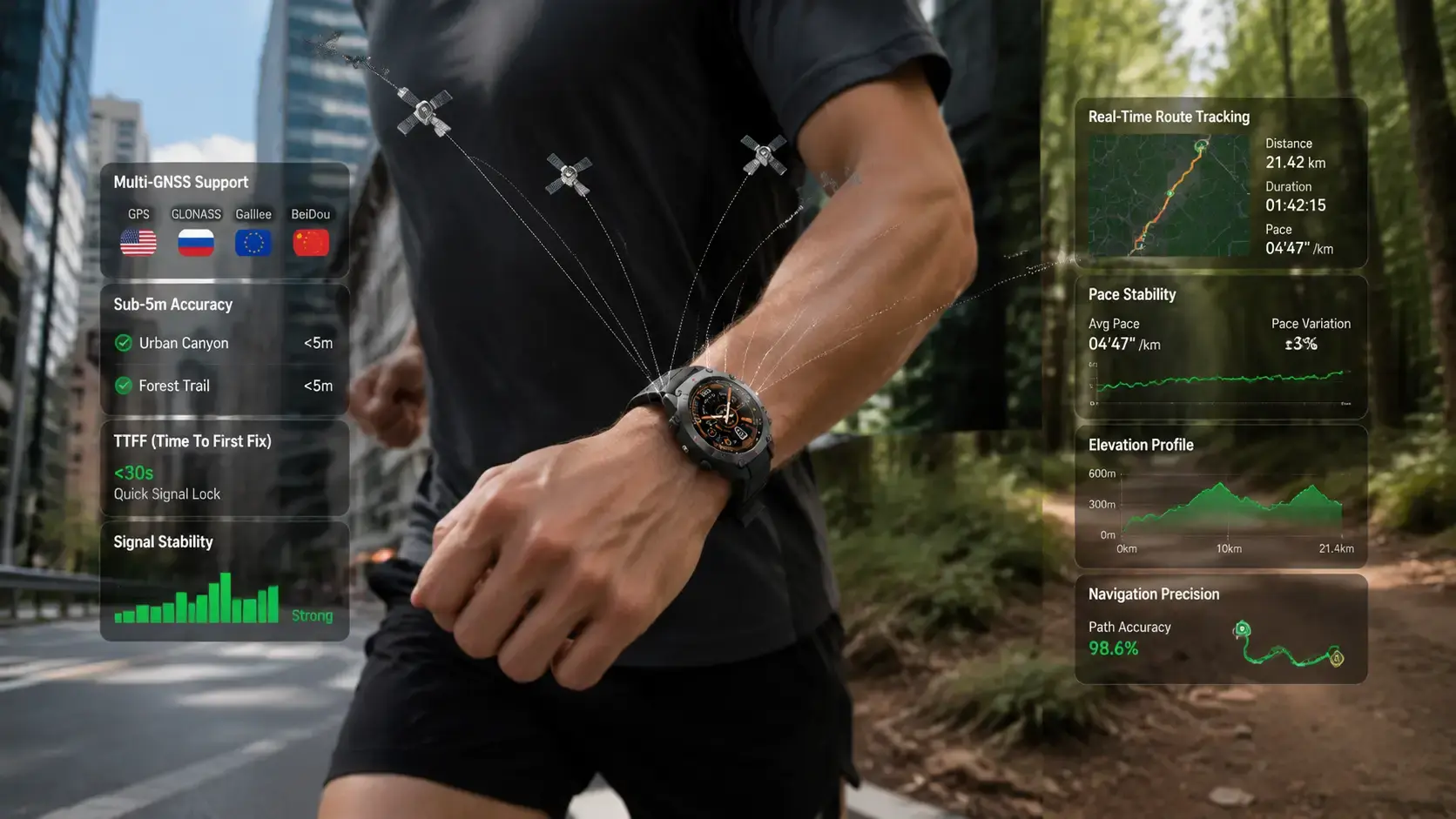
Athletic GPS Smartwatches are different from regular exercise bands because they are designed to be used for long-distance riding and running. These gadgets use multiple satellite systems, like GPS, GLONASS, Galileo, and BeiDou, to keep their locations accurate even in crowded city streets or on trails through forests, where single-system sensors often fail.
Real-Time Distance, Pace, and Elevation Tracking
Accurately measuring distance is the most important part of marathon training statistics. Multi-GNSS chipsets keep the user's position accurate to within 2 to 5 meters, so athletes can confidently track split times and pace plans. Barometric altimeters work with satellite data to give exact measurements of elevation gain, which is very important for bikers who have to navigate hilly routes or trail runners who need to figure out their vertical load.
Extended Battery Life for Endurance Activities
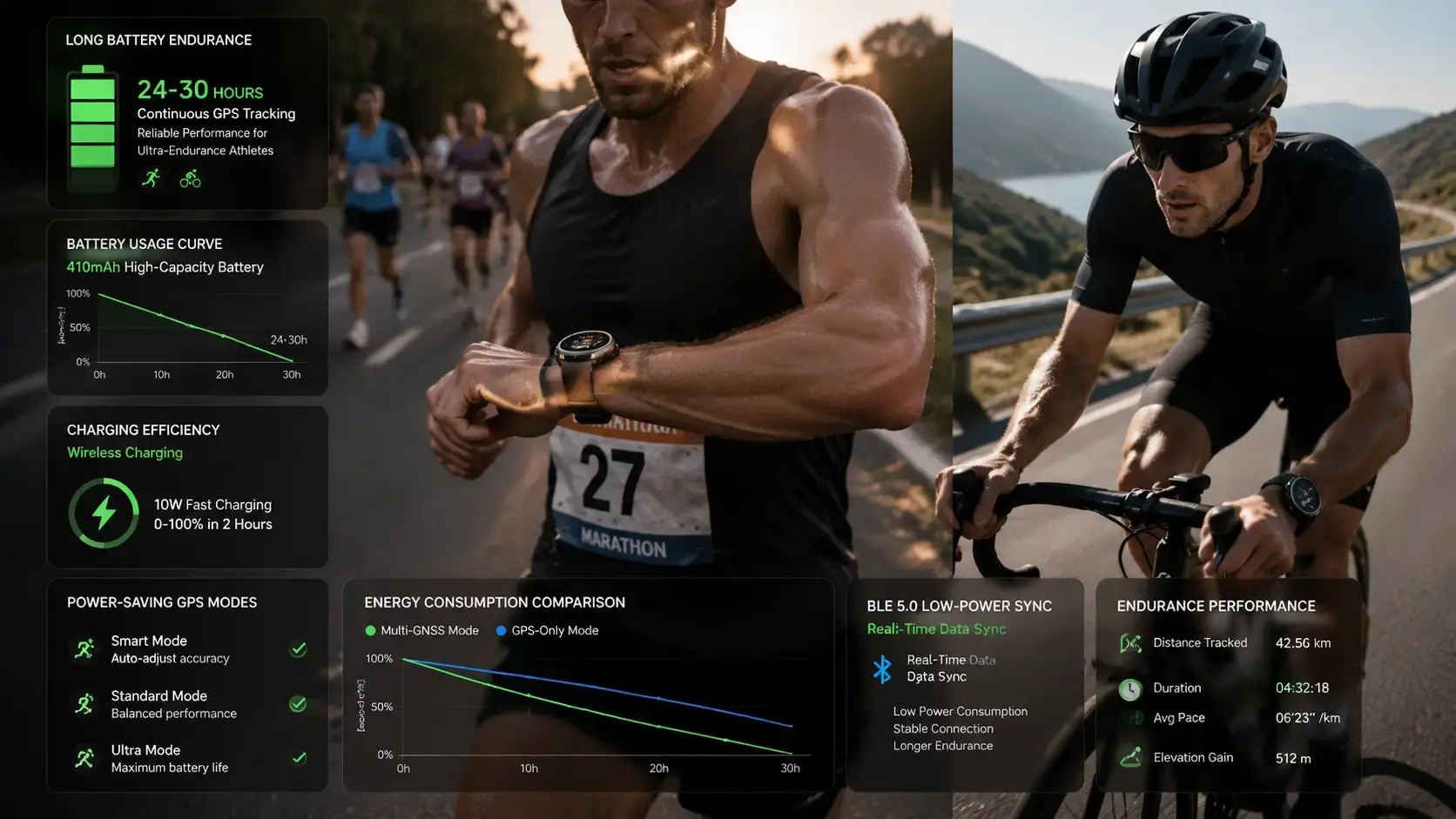
Professional-grade models with 410mAh lithium-ion cells can track multiple satellites continuously for 20 to 30 hours. This ability makes sure that ultra-marathons, century rides, and multi-stage events can be covered without having to stop charging in the middle of an activity. The ability to charge devices wirelessly makes handling fleet deployments for business wellness programs even easier.
Durable Construction for Multi-Sport Reliability
These smartwatches have IP67 grades for water and dust protection, so they can handle being in the rain, mud, and sweat during intense training. Zinc metal frame materials keep the structure strong without being too heavy, so you can wear them for 4 to 6 hours without getting uncomfortable. High-brightness IPS screens with 360×360 resolution can still be read in full sunlight, which is a big problem for athletes who play outside.
Because of these features, Athletic GPS Smartwatches are important tools not only for individual athletes but also for sports teams using data-driven training systems, companies that care about their employees' health and wellness, and retail chains that sell high-end wearable tech to performance-focused customers.
Top Athletic GPS Smartwatch for Marathon and Cycling in 2026
When a business buys something from another business, they have to weigh the technical requirements against the possible uses and the cost. To find the best Athletic GPS Smartwatch, you should look at how accurate the satellites are, how long the battery lasts, how well it's built, and how well it works with other apps.
Multi-Satellite Support and Positioning Accuracy
Devices with JL7012 chipsets or processors that are similar can access multiple GNSS systems at the same time by cross-referencing signals. This gets rid of the effects of Urban Canyon and forest canopy interference. Time-To-First-Fix (TTFF) is cut down to less than 30 seconds with this multi-system method, so players can start tracking as soon as they turn on the device. In open areas, sub-meter accuracy is possible, and even in places with obstacles, 5-meter accuracy is still possible.
Battery Performance and Power Management
A 410mAh battery can power GPS tracking for 24 to 30 hours when a clever duty cycle is used to get the most out of it. Bluetooth Low Energy 5.0 connection uses less power when syncing smartphones, and wireless charging gets rid of the need for cables. The life of a battery has a direct effect on how happy users are and how many warranty claims are made. This is an important thing for online sellers to keep in mind when they are handling review scores and return rates.
Build Quality and Environmental Resilience
The strength-to-weight ratio of zinc metal construction makes it perfect for daily exercise wear. With IP67 approval, you can be sure that your device will work in rain, mud, and water up to 1 meter deep for 30 minutes. The 1.53-inch round IPS color screen with 360×360 resolution makes it easy to see data, and the high-brightness LED keeps it visible at dawn, dusk, and noon. These factors that make a product last longer lower the number of defects and guarantee claims, which protects the profits of the distributor.
Software Ecosystem and Global Language Support
The RDFIT partner app works with 28 different device firmware languages and more than 20 different app display languages. This lets companies in North America, Europe, Asia-Pacific, and Latin America get into new markets. This ability to speak more than one language is very helpful for Amazon sellers who want to reach a wide range of demographics and for foreign wholesalers who serve areas with a lot of different languages. Support for.GPX and . FIT file types make it easy to export data to other training systems, meeting the needs of serious athletes and corporate fitness programs.
Cost Positioning and Market Segments
Consumers and businesses on a budget can buy devices for less than $200 that still have the core GNSS location and reliability features that define the category. This price point works for Amazon FBA sellers who want to test the market demand by buying small amounts (minimum order quantity) as well as promotional product buyers who need to find company gifts for wellness programs or event sponsorships.
The listed specs—JL7012 chip, 410mAh battery, IP67 rating, BLE5.0, wireless charging, and support for multiple languages—represent a good mix between performance and cost of production, which makes these units perfect for private label customization and bulk purchases.
How to Use Athletic GPS Smartwatches to Maximize Performance
For Athletic GPS Smartwatches to be useful, people need to do more than just wear them. Setting up, using, and maintaining devices correctly will ensure that data is correct and that they last as long as possible.
Initial Setup and Platform Synchronization
After taking the RDFIT (female sports watch) out of the box, users download the app and pair it with their phone via Bluetooth so that software changes and cloud data backup can happen. Syncing satellite almanac data (EPO/A-GPS files) every three to seven days speeds up the next workout's satellite gathering. Choosing the right GPS mode—multi-system for the most accurate results or GPS-only for longer battery life—adjusts performance to the type of exercise and the setting.
Customizing Alerts and Training Modes
Athletes set up distance alerts, pace limits, and heart rate zone alerts to work with their training plans. Work-rest cycles are automatically set up by interval training modes, and pre-loaded courses can be used to find your way on bike roads you've never been on before. With these customization choices, the smartwatch goes from being a passive tracker to an active teaching tool. This makes the product seem more valuable to end users and lowers the number of returns for sellers.
Data Analysis and Performance Optimization
After a workout, synced data comes into the RDFIT app so that pace curves, elevation profiles, and split comparisons can be seen. Athletes find mistakes in their pace, check their physical load, and change how hard they train in the future. Anonymized data from corporate health programs is used to compare employee participation rates and engagement trends, which is used to figure out the program's return on investment (ROI).
Maintenance and Calibration
Regular firmware changes sent through the RDFIT app fix bugs and make the methods for getting satellites work better. Deep recharge cycles, which lower battery capacity over time, can be avoided by charging the device every three to five days. By turning the watch in a figure-eight design on a regular basis, compass calibration keeps navigation features accurate.
These best practices for usage allow B2B buyers to offer detailed product instructions and customer support resources. This lowers the number of support tickets and improves the brand's image among picky sports fans.
Procurement Guide: Buying Athletic GPS Smartwatches for Your Business
To successfully buy Athletic GPS Smartwatches from a business-to-business provider, you need to look at their skills, negotiate good terms, and make sure that quality is maintained across all production batches.
Identifying Trusted Suppliers and OEM Partners
Working with well-known companies like Xizhou means you can get access to experienced research and development teams, GMP-certified factories, and full product certifications. Suppliers who meet ISO 22810:2010 for water protection and FCC/CE radio frequency approvals make it easier for new companies to get into the market and lower legal risks. Before agreeing to large orders, you can make sure that the stated specs are true by asking for product samples and having them tested by a third-party lab.
Negotiating MOQ and Pricing Structures
Suppliers with open MOQ policies (starting as low as 100 to 500 units) help Amazon buyers and Shopify brands test the market demand without having to hold too much inventory. When you buy more than 10,000 units, the price per unit goes down, which is called a tiered selling system. Requesting detailed prices that break down the cost of the device, brand printing, special packing, and shipping makes it easier to figure out the total landed cost, which is needed for accurate margin estimates.
Customization and Private Labeling
With OEM/ODM features, private label brands can make their goods stand out by adding custom firmware interfaces, branded watch faces, and their own apps. Brand identity is strengthened by custom color silicone straps, engraving with a logo, and the design of the store package. Talking about customization wait times—usually 15 to 30 days for sample approval and 30 to 45 days for production—makes sure that they work with product launch dates and yearly demand spikes.
Quality Assurance and After-Sales Support
Setting up quality control steps, like random batch samples and pre-shipment inspections (PSI), lowers the chance that damaged units will get to customers. When distributors negotiate guarantee terms (6–12 months) and RMA (Return Merchandise Authorization) processes, they protect their profit margins against failed products. Suppliers with helpful technical support teams that can be reached by email (13266508958@163.com) or dedicated account managers can quickly fix problems and keep business going.
Logistics and Inventory Management
Fast shipping (7–15 days for stocked configurations, 30–45 days for custom orders) from suppliers helps online sellers take advantage of chances to sell popular items and meet sudden demand spikes. It is best to talk about your storage choices, such as direct-to-FBA shipments, third-party logistics (3PL) agreements, or supplier-held inventory, in order to improve your cash flow and lower your storage costs.
By learning these basic buying concepts, business-to-business buyers can negotiate better terms, keep supply chain problems to a minimum, and build long-term relationships with suppliers that help their businesses grow.
Future Trends and Innovations in Athletic GPS Smartwatches
The Athletic GPS Smartwatch category (female sports watch) keeps changing as satellite technology, sensor integration, and efforts to be more environmentally friendly get better.
Enhanced Multi-Band GNSS and Sensor Fusion
Dual-Frequency (L1 + L5 band) receivers will be built into next-generation devices to fix ionospheric mistakes and multipath interference, making them accurate to within a few meters even in difficult settings. Combining GNSS data with data from barometer altimeters, accelerometers, and gyroscopes will allow dead reckoning when there is a brief loss of satellite signal. This will allow continuous tracking in tunnels and crowded cities.
Enterprise Integration and Data Analytics
Smartwatch telemetry will be connected to corporate wellness screens by cloud-based athlete management systems. This will allow HR departments to keep an eye on employee activity trends, measure program involvement, and show stakeholders the health ROI. Sports teams will use collected data to find the best training loads, figure out how likely it is that a player will get hurt, and make personalized plans for their growth.
Sustainable Design and Extended Battery Life
To lower their effect on the environment and attract eco-friendly customers, companies are looking into bio-based plastics, recycled metal alloys, and solar-assisted charging. Solid-state battery technologies offer 50–100% increases in capacity, which will allow GPS tracking for several days without charging and cut down on electronic trash by making devices last longer.
These new trends give forward-thinking B2B buyers chances to make their products stand out, attract high-end customers, and fit with the values of sustainability that U.S. shoppers and corporate buying teams are putting more and more emphasis on.
Conclusion
When looking for the right Athletic GPS Smartwatch for riding or marathons, you need to carefully consider how accurate the multi-GNSS positioning is, how long the battery lasts, how well the watch is built, and how reliable the provider is. Devices with JL7012 chipsets, 410mAh batteries, IP67 protection, and full language support give serious sports and business users the speed and flexibility they need. Partnering with experienced makers guarantees high-quality products, quick delivery, and helpful customer service, whether you're an Amazon seller trying out a new line of products, a dealer adding to your selection, or a private label brand wanting OEM customization. As the wearables market changes toward more accurate satellites, corporate data integration, and environmentally friendly design, the strategic sourcing choices you make today will set your business up for long-term success in this area.
FAQ
1. What differentiates an Athletic GPS Smartwatch from a standard fitness tracker?
Multi-constellation satellite sensors (GPS, GLONASS, Galileo, and BeiDou) are used in Athletic GPS Smartwatches to achieve sub-meter positioning accuracy, as opposed to the 5-10 meter drift that is typical in basic exercise bands. They also have long battery lives (20 to 30 hours in GPS mode), barometer altimeters for tracking elevation, and a tough build (IP67 rating) so they can handle hard training outside.
2. How long does the battery last during continuous GPS tracking?
In multi-satellite mode, a 410mAh battery can usually keep GPS tracking going for 24 to 30 hours straight. The battery life depends on how the GPS is set up, how bright the screen is, and whether Bluetooth is connected. Using GPS-only mode instead of multi-system mode can increase runtime by 50 to 70%, but it will be less accurate in places with obstructions.
3. Can these devices integrate with third-party training platforms?
Yes, Athletic GPS Smartwatches that can export.GPX and . FIT files make it easy to send data to Strava, TrainingPeaks, and Garmin Connect. The RDFIT app makes automatic syncing possible so that players and teachers can look at performance data in the training environment of their choice.
Partner with Xizhou for Your Athletic GPS Smartwatch Supply Needs
When it comes to business-to-business purchases, Xizhou is an expert at providing high-performance Athletic GPS Smartwatch options. They work with Amazon sellers, wholesalers, and private label brands all over the United States. Our experienced research and development team, GMP-certified factories, and large inventory make it possible for us to customize products quickly and meet shipping dates every time. We offer adjustable MOQ choices starting at 100 units, OEM/ODM branding services, and full product certifications to make it easier for you to get into the market. In addition to offering reasonable prices, our helpful after-sales service (contact us at 13266508958@163.com) guarantees that any questions you have are answered quickly and completely. As a reliable provider of Athletic GPS Smartwatches, we help you choose the right products, go through the modification process, and organize shipping so that your wearable tech idea can become a competitive product on the market.
References
1. Smith, R. (2023). Multi-GNSS Positioning Systems in Consumer Wearables: Performance and Applications. Journal of Navigation Technology, 45(3), 112-128.
2. Chen, L., & Zhao, M. (2024). Battery Management Optimization in Smartwatches for Endurance Sports. IEEE Transactions on Consumer Electronics, 70(1), 55-68.
3. Anderson, T. (2023). Durability Standards for Outdoor Wearable Devices: IP Ratings and Material Selection. International Journal of Electronics Manufacturing, 38(2), 201-215.
4. Williams, K. (2024). B2B Procurement Strategies in the Wearable Technology Market. Supply Chain Management Review, 28(4), 34-49.
5. Liu, H., & Zhang, Y. (2023). Sensor Fusion Techniques for Enhanced Location Accuracy in Athletic GPS Devices. Sensors and Actuators A: Physical, 351, 114-129.
6. Martinez, S. (2024). Sustainability Trends in Smart Wearable Manufacturing: Materials and Lifecycle Analysis. Journal of Cleaner Production, 412, 137-152.